
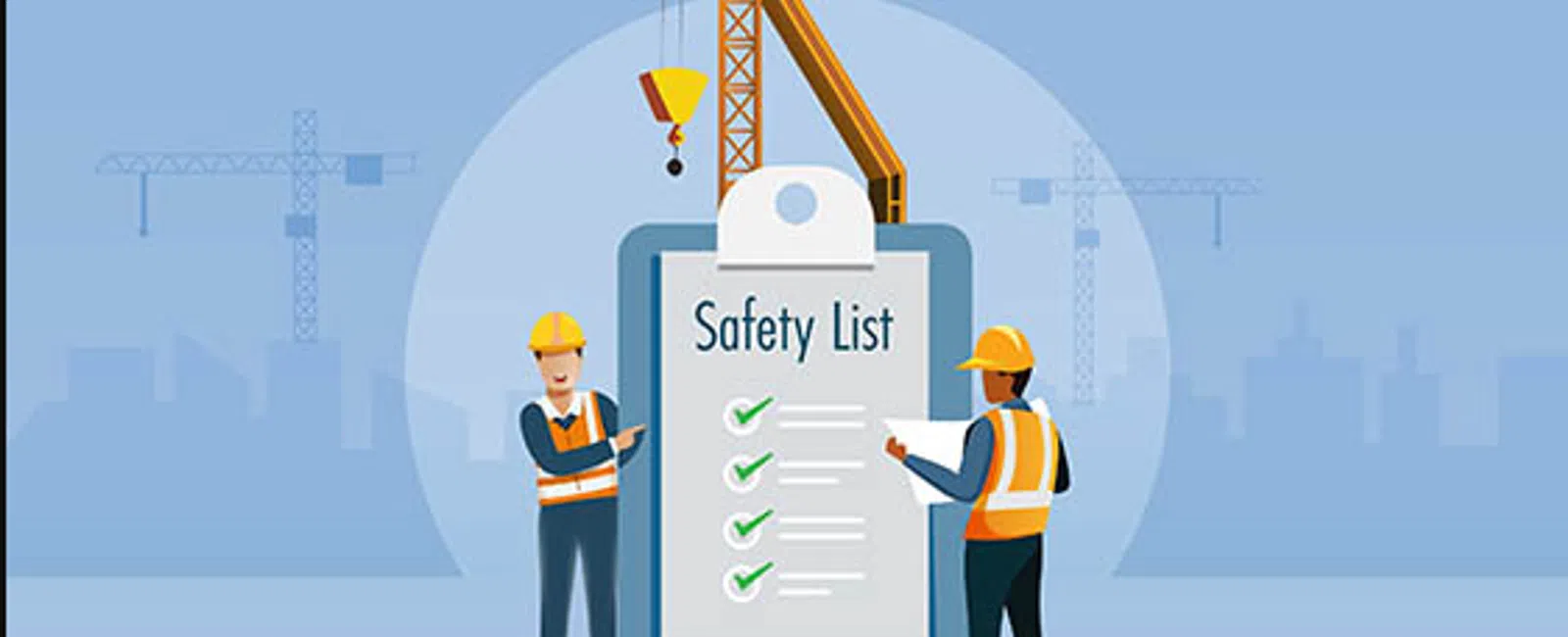
Running a construction business requires compliance with the
Occupational Safety and Health Administration's (OSHA's) many rules. But there
can be a big difference between doing the bare minimum and building a robust
safety culture that goes beyond basic requirements. Along with the most obvious
benefit — protecting the people on your jobsites — there are four financial reasons you
should exceed safety expectations.
1. To better manage costs
In its 2025
Workplace Safety Index: Construction report, insurer Liberty Mutual
estimated that the U.S. construction industry loses more than $10.4 billion a
year to serious, nonfatal workplace injuries. The report identifies the top
five causes of such injuries as 1) falls to lower level, 2) overexertion
involving outside sources, 3) struck by object or equipment, 4) falls
on the same level, and 5) other exertions or bodily reactions.
Direct costs arising from safety incidents can include workers'
compensation insurance claims and premium hikes, medical expenses, and legal
fees. But the indirect costs can be just as damaging: Serious incidents often
prompt work stoppages, accident investigations, equipment repairs or
replacement, labor shortages, increased overtime, retraining and stricter
supervision.
Then there's the issue of OSHA violations. Five of OSHA's top 10
most frequently cited standards for fiscal year 2025 are associated with the
construction industry. These include fall protection, ladders, scaffolding,
fall protection training and eye/face protection. An OSHA citation can create
immediate financial consequences through penalties, abatement costs and
potential legal exposure.
2. To attract and retain workers
It's no secret that the construction industry continues to
experience a long-running skilled labor shortage. In fact, in a January news
release, Associated Builders and Contractors estimated the industry must
attract 349,000 net new workers in 2026 and 456,000 in 2027 to meet demand.
By showing a serious commitment to keeping employees safe and
healthy, you may find it easier to hire and retain good workers. After all,
many of today's skilled workers can pick and choose from the top positions
available. A spotty safety reputation may be all it takes to send them to a
competitor.
3. To stay on schedule
A strong safety culture can support productivity by reducing the
disruptions that follow injuries, fatigue, illness, near-misses and jobsite
accidents. These events often idle workers, trigger investigations, delay
subcontractors and frustrate project owners.
Exceeding OSHA's minimum requirements can help you identify and
address risks before
they interrupt a job. Stronger training, clearer site-specific safety plans,
regular inspections and proactive communication — when consistently implemented
and enforced — generally reduce the likelihood of shutdowns, rework and crew
shortages caused by preventable incidents.
4. To build your backlog
When bidding, well-documented and enforced safety policies,
procedures and training are major pluses. Project owners, general contractors
(if you're a subcontractor), sureties and other stakeholders are more likely to
want to work with your business if it has a long history of OSHA compliance and
low incident rates.
In short, safety can help protect and build your backlog by
strengthening your reputation in the marketplace. A sound reputation supports
repeat business, referrals and other opportunities to compete for — and win —
larger or more selective projects.
It's a financial issue
Safer jobsites help protect the well-being of everyone on them.
But safety is also a financial issue. By going beyond minimal OSHA compliance,
you can better position your construction business to control costs, avoid
margin-eroding job disruptions, attract and retain skilled workers, and
maintain a strong reputation. We'd be happy to discuss how safety-related costs
and risks affect your business's financial performance.